
London rewards a loose plan more than a tight one. It’s less a single city to “see” and more a collection of very different neighborhoods stitched together by one of the best public transport networks in the world — which means the two decisions that shape a London trip more than any single attraction are where you stay and how well you use the trains once you’re there. This covers both, plus the sights worth building your days around and a handful of UK towns you can reach and return from in a single day.
Top Things to Do in London
The British Museum — free to enter, and home to genuinely significant pieces of world history including the Rosetta Stone and the Parthenon sculptures. Easily worth half a day on its own.
The Tower of London — nearly a thousand years of history in one site, from royal fortress to prison to the current home of the Crown Jewels. Book timed entry in advance in peak season; it sells out.
Buckingham Palace and the Changing of the Guard — the ceremony runs on a set schedule (typically alternate days, more frequently in summer), so check the current calendar before planning your morning around it.
Westminster and the Houses of Parliament — Big Ben, Westminster Abbey, and the Houses of Parliament sit within a few minutes’ walk of each other along the Thames, making this one of the most efficient sightseeing clusters in the city.
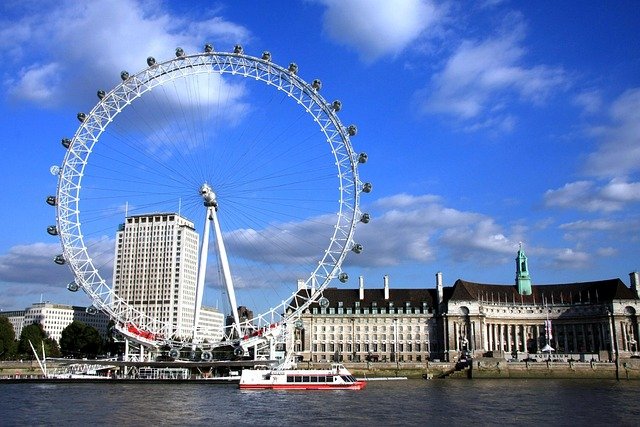
The London Eye and South Bank — the Eye gives a genuinely good orientation view over the city, and the South Bank walkway from there toward Tower Bridge passes street performers, Borough Market, and Shakespeare’s Globe along the river.
Camden Market — a sprawling, slightly chaotic market built around Camden Lock, strong for street food, vintage clothing, and a very different, grittier London than Westminster’s.
Free world-class art — the National Gallery, Tate Modern, and Tate Britain are all free to enter for their permanent collections, which is a genuinely rare thing among major world museums.
Sky Garden — a free, ticketed (book ahead) viewing gallery at the top of 20 Fenchurch Street, and one of the better skyline views in London that most visitors don’t know is free.
💡 Pro Tip
London’s major museums (British Museum, National Gallery, Tate Modern, Natural History Museum) are free to enter, but the special/touring exhibitions inside them usually aren’t — budget separately for those if a specific exhibition is the reason you’re going.
Where to Stay in London: Best Areas by Trip Style
London’s neighborhoods genuinely feel like different cities, so the “best” area depends heavily on what kind of trip you’re taking.
- Covent Garden / West End — the most central base, walking distance to theatre, Soho’s restaurants, and most major sights. Convenient, but it’s also the most expensive part of the city to book a hotel in.
- South Bank — riverside, walkable to the Eye, Tate Modern, and Borough Market, generally a notch cheaper than the West End for a comparable standard of hotel, with the added benefit of river views some Zone 1 hotels can’t offer.
- Kensington — upscale, quiet, and home to the Natural History Museum, Science Museum, and V&A, all free. A strong pick for a calmer trip or if museums are the priority.
- Shoreditch — East London’s creative, nightlife-heavy district; not as central for the classic sights, but strong for food, bars, and a younger, trendier scene.
- King’s Cross / Paddington — both major transport hubs, which makes them genuinely practical bases: easy Tube access to everywhere else, direct rail links out of the city (useful for the day trips below), and generally better hotel value than Zone 1’s tourist core.
🏨 Where to Stay
First visit, want to walk to most sights? Covent Garden or South Bank. Tighter budget, don’t mind a short Tube ride? King’s Cross or Paddington. Traveling with kids or want a quieter base near free museums? Kensington.
How to Get Cheap Hotels in London (Without Landing Somewhere Inconvenient)
London hotels have a reputation for being expensive, and central options genuinely are — but “cheap hotels in London” and “hotels in a useless location” don’t have to be the same search result if you know where to look.
- Stay just outside Zone 1, near a Tube station, not far from one. A hotel in Zone 2 directly outside a well-connected Tube stop can cost meaningfully less than an equivalent Zone 1 property while adding only 10–15 minutes to most journeys.
- Check budget hotel chains directly, not just aggregator sites. Premier Inn and Travelodge both operate numerous London locations at prices well below comparable independent hotels, with consistent, predictable quality — not glamorous, but reliable.
- Consider an aparthotel for stays of 4+ nights. A small kitchen means fewer restaurant meals, which adds up fast in London, and aparthotel nightly rates are often competitive with a standard hotel room of the same standard.
- Midweek stays are usually cheaper than weekends, since London’s hotel demand skews toward weekend leisure travel on top of constant weekday business travel.
- Set a price alert rather than booking the first result. London hotel rates move with both season and currency exchange rates for international visitors — tracking a specific property for a week or two before booking often surfaces a meaningfully better rate than the first price you see.
💰 Rough Nightly Hotel Budget (Per Room)
Hostel dorm bed: £25–45 · Budget chain (Premier Inn/Travelodge, Zone 2): £70–110 · Mid-range hotel (Zone 1 or well-located Zone 2): £120–200 · Upscale/boutique: £250+ — all figures swing with season, so treat these as a starting point, not a quote
Compare London Hotels by Area
Filter by Tube zone, free cancellation, and guest rating
Getting Around London
The Tube (Underground) is the backbone of getting around, and tapping a contactless bank card or phone directly at the gates is now the easiest way to pay — it automatically calculates the cheapest fare for your day, matching or beating a physical Oyster card without needing to buy or top one up in advance. Buses are slower but cheap and a genuinely good way to see the city above ground rather than underground. For most trips within Zones 1–2, walking between nearby sights is often just as fast as the Tube once you account for station transfers.
Day Trips from London: Easy Escapes Within the UK
London’s rail network makes a surprising amount of England reachable in a single day, out and back, without needing to change hotels.
Windsor is the closest and easiest option, roughly 40 minutes by direct train from London Waterloo or Paddington. Windsor Castle is the oldest and largest occupied castle in the world and remains an official residence of the British monarchy, which gives it a different feel from a purely historical site — check the schedule for the Changing of the Guard here too, since it runs on its own separate calendar from Buckingham Palace’s.
Oxford, about an hour from London Paddington, is worth visiting as much for wandering as for any single sight — the university’s historic colleges (several open to visitors for a fee), the Bodleian Library, and the Bridge of Sighs give it a dense, walkable concentration of centuries-old architecture that’s hard to match in a single afternoon anywhere else in England.
Cambridge, similarly about an hour from London King’s Cross, offers a comparable university-town experience with its own distinct character — punting on the River Cam past the “Backs” (the riverside gardens behind several colleges) is the quintessential Cambridge activity, and King’s College Chapel’s fan-vaulted ceiling is worth the entry fee alone.
Bath, roughly 90 minutes from London Paddington, centers on the Roman Baths — a genuinely well-preserved 2,000-year-old bathing complex built around natural hot springs — alongside the Georgian architecture that gives the whole city its uniform, honey-colored look, most famously the Royal Crescent.
Stonehenge, about 90 minutes from London by a combination of train and connecting bus (or a direct guided tour, which is often the more practical option given the limited public transport directly to the site), remains genuinely mysterious — the purpose behind the stone circle’s construction roughly 5,000 years ago is still debated among archaeologists, which is part of what keeps it compelling despite being, in person, smaller than most people expect.
Brighton, about an hour from London Victoria, is the closest proper seaside trip — a pebble beach, the Victorian Brighton Palace Pier, and the Royal Pavilion’s striking Indo-Saracenic architecture make it a genuinely different day from anything London itself offers.
Canterbury, roughly an hour from London St Pancras on the high-speed rail link, centers on Canterbury Cathedral, one of the oldest and most significant Christian sites in England and the destination at the heart of Chaucer’s The Canterbury Tales — the compact medieval old town around it is easily covered on foot in an afternoon.
💡 Pro Tip
Book UK train tickets in advance where possible rather than at the station — advance fares are often significantly cheaper than walk-up prices for the same route, sometimes by half or more, and the discount applies to most of these day-trip routes.
Frequently Asked Questions
How many days do I need for London itself before doing day trips? Three to four days gives you a reasonable first pass at the major sights without feeling rushed. If day trips are a priority, five to six days lets you fit one or two of them in without cutting the London portion of the trip short.
Is London expensive to visit? It can be, but less uniformly than its reputation suggests. Many of the best museums are free, public transport is efficient and reasonably priced with contactless tap-in, and hotel cost is the biggest lever — booking just outside Zone 1 near a Tube station is the single most effective way to bring the overall cost down without sacrificing convenience.
What’s the best time of year to visit London? Late spring (May–June) and early autumn (September) tend to offer the best balance of decent weather and manageable crowds, avoiding both the summer peak and winter’s shorter daylight hours. That said, London runs well as a destination year-round — indoor sights like the major museums make it a reasonably weather-proof city trip even in winter.
Do I need to book day-trip train tickets in advance? It’s not strictly required for most routes, but it’s worth doing anyway — advance UK rail tickets are often considerably cheaper than buying on the day, and booking ahead guarantees you a specific train rather than queuing at a ticket machine the morning of.
Planning the flights to get to London in the first place? Our guide to booking flights and hotels on a budget covers the price-tracking strategy worth applying to both the flight and the hotel booking here.