
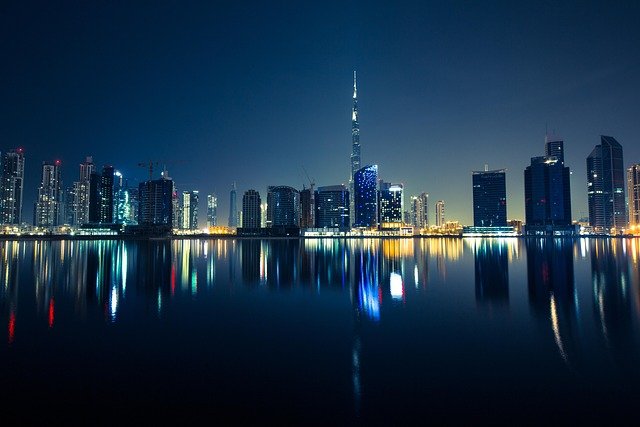
Dubai rewards a bit of upfront planning more than most cities. It’s spread out enough that where you book your hotel genuinely shapes your trip — Downtown and Dubai Marina can feel like different cities entirely — and it’s one of the few major destinations where renting a car is a completely normal, well-supported choice for a short tourist trip rather than something only long-stay visitors do. This guide covers both of those decisions in detail, alongside the entry requirements and logistics you’ll want sorted before you land.
Visa and Entry
UAE entry rules depend entirely on your nationality, and the list of who gets visa-free entry, free visa on arrival, or needs to apply in advance has expanded and shifted more than once recently. Broadly:
- Citizens of GCC countries enter freely with no visa or stamp process at all.
- A large group of nationalities (covering most of Western Europe, the Americas, and several parts of Asia-Pacific) get a free visa stamp on arrival, valid for either 30 or 90 days depending on nationality.
- Some nationalities that don’t automatically qualify — this list has grown throughout 2026 — can still get a visa on arrival if they hold a valid, unexpired visa or residence permit from an approved country such as the US, UK, an EU state, Canada, Australia, or Japan.
- Travellers who don’t fall into either category need to apply for a UAE visit visa before flying.
💡 Pro Tip
Don’t rely on a fixed country list from any single article, including this one — the UAE’s visa-on-arrival eligibility has been updated multiple times in 2026 alone. Check your specific eligibility on the official UAE ICP/MOFA visa checking tool before booking flights, and carry proof of any qualifying residence permit at immigration, not just your passport.
Whatever category you fall into, keep your passport valid for at least six months beyond your arrival date, and have a return or onward flight and proof of accommodation ready — standard requirements across nearly every entry category.
Best Time to Visit
November through March is the comfortable window — daytime temperatures sit in a genuinely pleasant range for walking around, outdoor dining, and desert excursions. April and October are transitional and still manageable. May through September gets brutally hot and humid, often well past what’s comfortable for anything outdoors between late morning and early evening; it’s also when hotel rates drop the most, which is the trade-off if budget matters more than being outside.
Where to Stay: Choosing Your Neighborhood
This is the decision that shapes the rest of your trip more than almost anything else, since Dubai’s neighborhoods have genuinely different characters.
- Downtown Dubai — the Burj Khalifa, Dubai Mall, and the Dubai Fountain are all here. The most central, most touristy, and typically the most expensive base, but unbeatable if you want to walk to the headline sights.
- Dubai Marina & JBR (Jumeirah Beach Residence) — waterfront towers, a genuine beach, and Dubai’s densest concentration of restaurants and nightlife. A strong pick if you want beach time and a livelier evening scene without needing a car for everything.
- Palm Jumeirah — the artificial palm-shaped island, home to Dubai’s most photographed resort properties. This is the splurge/honeymoon choice — beautiful, but more isolated, so budget for taxis or a rental car to get anywhere else.
- Deira & Bur Dubai (Old Dubai) — the historic trading district along Dubai Creek, with the gold and spice souks, and noticeably cheaper hotels. Less polished, more character, and a useful base if budget matters and you don’t mind a metro ride to the newer districts.
- Business Bay — modern, well-connected by metro to Downtown, and often better value than Downtown itself for a comparable standard of hotel.
🏨 Where to Stay
First visit and want to see everything without much planning? Downtown or Business Bay. Want beach time as a real part of the trip, not a day excursion? Dubai Marina or JBR. On a tighter budget? Deira or Bur Dubai, paired with the Metro.
Compare Dubai Hotels by Neighborhood
Filter by area, free cancellation, and guest rating
Getting Around: Metro, Taxis, and Ride-Hailing
The Dubai Metro is clean, cheap, and covers a surprising amount of the city, including a direct line connecting the airport to Downtown and onward toward the Marina — a legitimately good option if your hotel is near a station. Taxis are plentiful, metered, and reasonably priced, and Careem and Uber both operate widely as ride-hailing alternatives if you’d rather book from an app.
For a lot of visitors, some mix of Metro plus taxis/ride-hailing covers the whole trip without ever needing to drive. Where a car actually earns its cost is day trips outside the city — the desert, Abu Dhabi, or Hatta — and for anyone staying somewhere less central, like Palm Jumeirah, where taxi costs add up fast over several days.
Car Rentals in Dubai: What You Actually Need
This is where a lot of first-time visitors get tripped up, so it’s worth covering properly.
Do you need an International Driving Permit (IDP)? It depends on your nationality. Licenses from a fairly long list of countries — including the US, UK, most of the EU, Canada, Australia, New Zealand, Japan, South Korea, and GCC states — are generally accepted on their own for a tourist rental, provided the license is in English or Arabic (or accompanied by an official translation). If your license doesn’t fall into that group — this includes India, Russia, and China, among others — you’ll need an IDP alongside your original national license. The rule exists because Dubai’s Roads and Transport Authority (RTA) requires a license that can be read and verified at a roadside stop or in an accident, and the IDP is what makes that possible.
💡 Pro Tip
Sort your IDP before you fly if there’s any chance you’ll need one — it’s a same-day process through your home country’s motoring authority, but it’s not something you can arrange after landing in Dubai. Some tourists have been able to get one locally through UAE-based services, but don’t count on that as your plan.
Other requirements that apply regardless of nationality:
- Minimum age is typically 21, though many companies set 25 as the minimum for premium and luxury vehicle categories, sometimes with a young-driver surcharge below that.
- A credit card in the driver’s own name is standard for the security deposit — debit cards are often not accepted for this.
- Basic third-party liability insurance is legally mandatory and normally bundled into the rental price; full/comprehensive coverage is worth adding separately, since the basic tier won’t cover damage to the rental car itself.
💰 What to Budget for a Rental
Economy car: roughly AED 100–180/day · Mid-size/SUV: AED 200–350/day · Luxury: AED 500+/day · Add fuel (UAE petrol is inexpensive by international standards), Salik toll charges if you’re driving on major roads/bridges, and a refundable security deposit typically held on your card for the rental duration.
Tolls and parking: Dubai’s toll system, Salik, charges automatically as you pass under toll gates on major roads — rental cars usually come with a toll tag already linked, with charges added to your final bill rather than needing cash at a booth. Paid parking (Mawaqif) operates in most central areas via app, SMS, or roadside meters, and is enforced seriously enough that it’s worth actually paying rather than risking a fine.
One more thing worth knowing: stick to licensed, RTA-registered rental companies. Renting through an unlicensed operator without proper documentation isn’t just a legal grey area — if you’re stopped or in an accident without a valid license/IDP combination, insurance can be denied and fines can be significant. It’s not worth the marginal savings some informal operators advertise.
Money and Everyday Costs
The UAE dirham (AED) is pegged to the US dollar, so it doesn’t fluctuate the way some destination currencies do, which makes budgeting a little more predictable. Dubai skews expensive relative to a lot of Asian destinations, but it’s not uniformly so — street food and mall food courts are genuinely affordable, while beach clubs and fine dining sit at prices comparable to any major Western city.
What There Is to Do
The headline sights — the Burj Khalifa observation deck, Dubai Mall (and its aquarium), the Dubai Fountain show, and the gold and spice souks along the Creek — cover a solid first-time itinerary on their own. A desert safari (dune driving, a Bedouin-camp-style dinner, and usually a camel ride) is close to a rite of passage for first-time visitors and is easy to book as a half-day or evening tour rather than something you’d self-drive. Beach time at Marina Beach, JBR, or a hotel-adjacent stretch of coast rounds out most itineraries.
Cultural Norms Worth Knowing Before You Go
The UAE is more liberal than many of its neighbors, but it’s still worth knowing a few norms going in: dress modestly outside of beach/pool areas (shoulders and knees covered is a safe default in malls, souks, and religious sites), public displays of affection are discouraged, and alcohol is only served in licensed venues — hotel bars and restaurants, mostly — rather than being available in general shops the way it might be at home.
Sample Daily Budget
💰 Rough Daily Estimate, Per Person
Budget: AED 250–400/day (mid-range hotel split two ways, Metro/taxis, food court and casual dining) · Mid-range: AED 500–800/day (better hotel, a few taxis or a shared rental car day, mix of casual and nicer dining) · Luxury: AED 1,200+/day (Palm Jumeirah or Downtown 5-star, private car days, fine dining)
Frequently Asked Questions
Do I need a car in Dubai, or is public transport enough? For a Downtown/Marina-focused trip, Metro plus taxis or ride-hailing covers almost everything comfortably. A rental car earns its cost mainly for day trips outside the city (desert, Abu Dhabi, Hatta) or if you’re staying somewhere less central, like Palm Jumeirah, where taxi costs add up over several days.
Can I drive in Dubai with my home country’s license? For a fairly broad list of countries — including the US, UK, most of the EU, Canada, Australia, and GCC states — yes, without needing anything extra, as long as it’s in English or Arabic. Many other nationalities need an International Driving Permit alongside their national license. Check the current accepted-license list with RTA or your rental company before you travel, since this does vary by nationality.
Is alcohol available in Dubai? Yes, but only in licensed venues — hotel bars, restaurants with a license, and licensed lounges — not in general retail shops the way it might be at home.
Is Dubai expensive to visit? It can be, but it doesn’t have to be uniformly so. Hotel choice is the biggest lever: Downtown and Palm Jumeirah command premium prices, while Business Bay, Deira, and Bur Dubai offer a noticeably cheaper base with easy Metro access to everything else. Food follows a similar pattern — food courts and casual local spots are genuinely affordable even as beach clubs and fine dining sit at prices comparable to any major global city.
Once your Dubai flights and hotel are booked, our guide to booking flights and hotels on a budget covers the price-tracking strategy worth applying here too, especially since Dubai hotel rates swing hard between peak winter season and the summer off-season.