
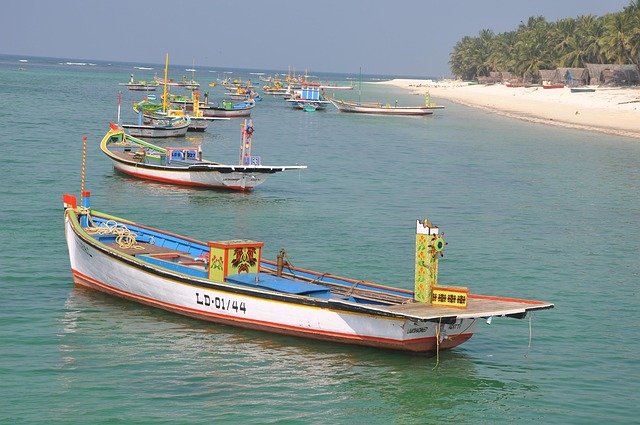
Lakshadweep isn’t a place you drift into on a whim. Unlike Goa or the Andamans, you can’t just book a flight and figure the rest out on arrival — every visitor, Indian citizens included, needs government clearance before setting foot on most of these islands. That single fact scares off a lot of travellers before they even look at the lagoons, which is a shame, because the process is considerably simpler than it used to be, and the islands themselves are some of the least-touched coastline anywhere in India.
This guide walks through exactly what an Indian traveller needs to do, in order: get the permit sorted, pick the right island for what you actually want out of the trip, and get there without paying for anything you might not be able to use.
Do You Actually Need a Permit?
Yes — this part hasn’t changed. Under longstanding entry restriction rules for the islands, every non-native visitor, including Indian citizens, needs an entry permit before travelling to any inhabited or tourist-accessible island in Lakshadweep. There’s no exception for domestic travellers the way there might be elsewhere in India.
What has changed, significantly, in 2026: the process used to require arranging a local sponsor on the islands and obtaining a police clearance certificate from your hometown station — two steps that stalled a lot of first-time visitors before they’d even booked a flight. Under the revised guidelines, that local sponsor requirement and the hometown PCC have both been dropped for most applicants; security verification is instead handled internally by Lakshadweep Police after you submit your application, rather than being your responsibility to arrange in advance.
💡 Pro Tip
Permit rules for Lakshadweep have shifted more than once in the last couple of years, and plenty of older blog posts and even some travel-agent sites still describe the pre-2026 process. Before you apply, double-check the current requirements directly at epermit.utl.gov.in or lakshadweep.gov.in rather than relying on any single guide — including this one.
How to Apply for Your Entry Permit
The process differs slightly depending on which island you’re headed to.
For uninhabited resort islands (like Bangaram): these islands have no local population, so the process is simpler — you book your government-run accommodation directly through the SPORTS (the Lakshadweep tourism department’s booking arm) website, upload your ID proof, and the permit is handled as part of that booking. No separate application needed.
For inhabited islands (like Agatti or Kavaratti): you’ll apply directly through the official Entry Permit Portal at epermit.utl.gov.in.
💰 What You’ll Need
Valid photo ID (Aadhaar, passport, voter ID, or driving licence) · confirmed accommodation details · your travel itinerary and chosen island(s) · a small application fee plus a per-day environmental/heritage charge, currently in the range of ₹200 per person per day — confirm the exact current fee on the portal, as it’s adjusted periodically
Roughly how long it takes: processing typically runs 3–7 working days, stretching to 7–10 working days during the December–March peak season. The administration recommends applying at least 14 days before travel, and several tour operators suggest padding that further — 30 days out is a safer buffer if your dates are flexible.
💡 Pro Tip
Don’t book non-refundable flights or pay hotel deposits until your permit is actually approved. It’s an unglamorous piece of advice, but it’s the single most common regret among first-time Lakshadweep travellers — permits are reviewed for completeness, and any mismatch in your documents can delay approval past your intended travel date.
Working with a private tour operator or travel agent who handles the permit as part of a package is also common, and often worth the modest extra cost if this is your first time navigating the process — they’ll know current requirements island-by-island better than a general guide can.
Which Islands Can You Actually Visit
Lakshadweep is a chain of 36 coral islands, but only a handful are set up for tourism — the rest are either uninhabited outcrops or islands where entry is restricted beyond the general tourist permit.
- Agatti — the main gateway island, home to Lakshadweep’s only commercial airport. Inhabited, with a real local community, guesthouses, and easy access to nearby lagoons.
- Bangaram — uninhabited, resort-only. No local population means a simpler permit process, and it’s the most “remote island escape” feeling of the accessible islands.
- Kadmat — known for particularly clear water and strong diving/snorkelling, less commercialised than Agatti.
- Kavaratti — the administrative capital of Lakshadweep, with a larger local population and a mix of historical sites alongside beaches.
- Minicoy — geographically and culturally distinct (closer to the Maldives than the rest of Lakshadweep), known for its lighthouse and tuna-fishing heritage.
🏨 Where to Stay
If diving and snorkelling are the main goal, Bangaram or Kadmat are the stronger picks. If you want an easier logistics trip with more amenities and a real sense of island life, Agatti is the more forgiving choice for a first visit.
How to Reach Lakshadweep
By air: Agatti Island Airport (AGX) is the only commercial airport in the territory, connected by flights from Kochi, with occasional service from Bengaluru. It’s a short hop — under two hours in the air — but flights are limited in number and sell out fast in peak season, so book (refundably, until your permit clears) well ahead. From Agatti, onward transfers to other islands are by boat.
By sea: passenger ships run from Kochi and Kozhikode (Calicut) in Kerala to the islands. It’s a considerably longer journey — routinely an overnight sailing — but it’s the budget option, and some travellers specifically choose it as part of the experience rather than a compromise.
Best Time to Visit
October through April is the window nearly every source agrees on, and for good reason: the northeast monsoon clears out by early October, seas stay calm enough for the boat transfers between islands, and visibility for diving and snorkelling is at its best. The monsoon months (roughly May to September) bring rough seas that can disrupt inter-island ferries entirely, and several tourism operations scale back or close during this stretch.
What There Is to Actually Do
Scuba Diving & Snorkelling in Lakshadweep’s Lagoons
Some of the best-preserved coral reef systems in India
This is not a destination built around nightlife or sightseeing circuits — the appeal is almost entirely the water. Scuba diving and snorkelling across the lagoons and reef edges are the headline activities, with kayaking, glass-bottom boat rides, and simple lagoon swimming filling out a typical day. Water sports centres are attached to most tourist accommodations, so you generally don’t need to arrange these separately in advance.
Sample Budget
💰 Rough Per-Person Estimate (5 Days / 4 Nights)
Entry permit + heritage fee: ₹2,000–3,000 · Return flights (Kochi–Agatti): ₹15,000–25,000 depending on season · Accommodation (mid-range, 4 nights): ₹12,000–25,000 · Food and water activities: ₹6,000–10,000 · Total: roughly ₹35,000–60,000, excluding flights to Kochi itself
Budget travellers taking the ship instead of flying, and staying in simpler guesthouses on Agatti or Kavaratti, can bring this down meaningfully — the ferry alone is a fraction of the flight cost, though it costs you a lot more time.
What to Pack
Beyond the standard tropical-trip basics (reef-safe sunscreen, a hat, a light rain layer even in the dry season), a few things are specific to Lakshadweep: modest clothing for the inhabited islands, since these are traditional Muslim-majority communities where beachwear is fine at resort areas but not appropriate in villages; your own snorkelling gear if you’re particular about fit, though rentals are widely available; and copies of your permit and ID, since these are checked at multiple points — boarding your flight or ferry, and again on arrival at the island.
Frequently Asked Questions
Do foreign nationals need a different process than Indian citizens? Yes. Foreign tourists and OCI cardholders can visit Lakshadweep, generally limited to a smaller set of islands such as Agatti, Bangaram, and Kadmat, and face additional verification steps beyond what’s required of Indian citizens. If you’re travelling with a foreign national in your group, confirm their specific requirements on the official portal separately — the process isn’t identical to the domestic one.
Is alcohol available in Lakshadweep? Most of Lakshadweep is dry, in keeping with the islands’ Muslim-majority communities. Some resort properties on uninhabited islands, Bangaram in particular, have historically been an exception for tourists — but this varies by property and can change, so check directly with your specific resort rather than assuming.
Can I visit Lakshadweep without going through a tour operator? Yes, independent travel is entirely possible, particularly for inhabited islands like Agatti where you apply directly through the permit portal. For uninhabited resort islands, you’ll go through the SPORTS booking system regardless, which functions similarly whether or not you consider that “independent.”
Is Lakshadweep worth it compared to the Maldives or Andamans? That depends on what you’re after. Lakshadweep is considerably more affordable than the Maldives and gives a genuinely less-commercialised experience than most of the Andamans at this point — the trade-off is the permit process and more limited tourist infrastructure, which suits travellers who want a quieter, less-built-up trip more than those wanting resort-heavy convenience.
Planning the rest of your trip? Our guide to booking flights and hotels on a budget covers the price-tracking and booking strategy this itinerary is built around.